
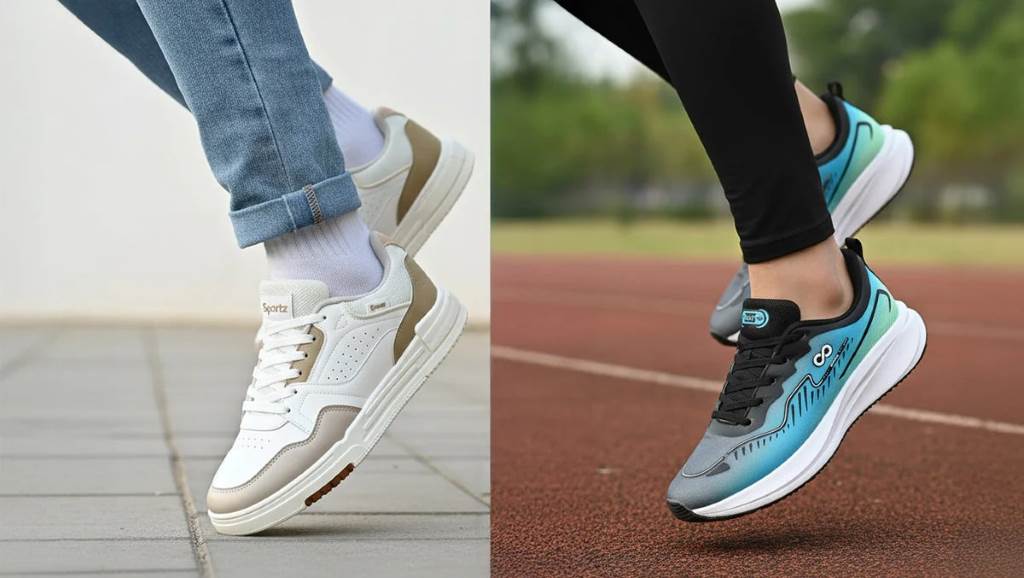
You grab your favorite pair of kicks for a casual stroll, but later switch to polished loafers for a meeting. That shift feels effortless, yet it highlights a world of variety in footwear. So, what’s the difference between shoes and sneakers? At its core, shoes represent a vast umbrella term for any foot covering, from formal oxfords to rugged boots. Sneakers, however, carve out a niche as athletic-inspired casual options with flexible designs and cushy soles.
This distinction matters more than you think. For instance, the global sneaker market hit $94.1 billion in 2024 and projects to reach $96.6 billion by the end of 2025, according to market research from Cognitive Market Research. Meanwhile, the U.S. Bureau of Labor Statistics notes that households spent an average of $655 on women’s apparel, including footwear, in 2023—showing how everyday choices drive a booming industry. As we unpack these differences, you’ll gain insights to pick pairs that boost comfort, style, and even health. Let’s step into the details together.
Understanding the Basics: What Defines Shoes?
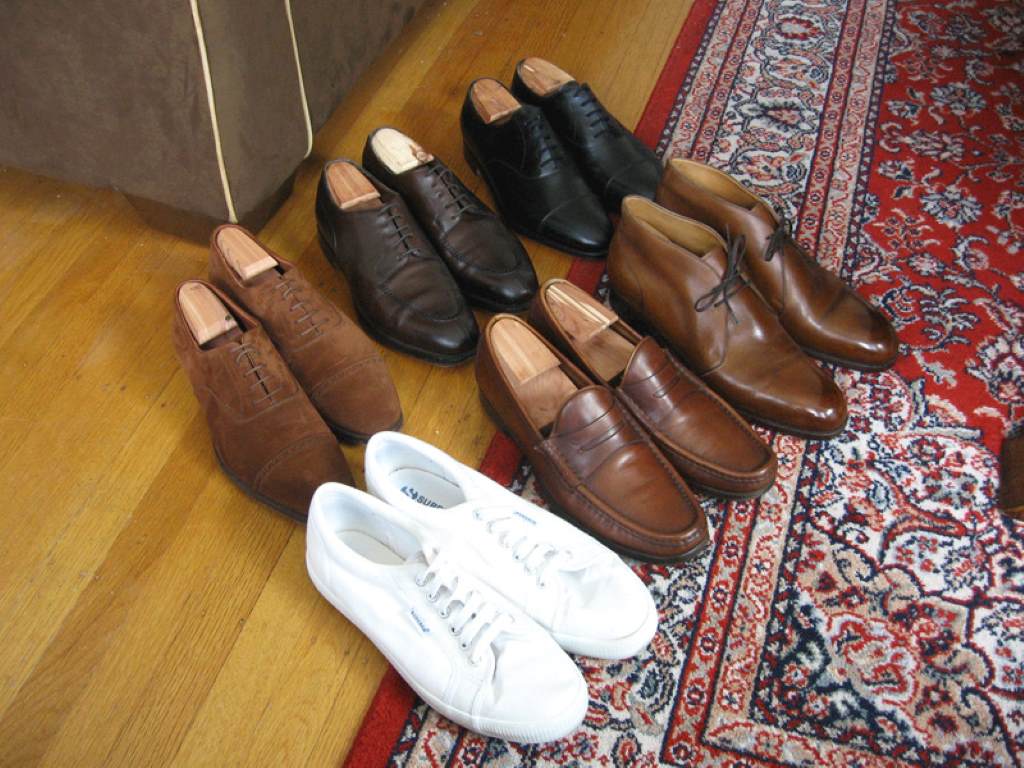
Shoes cover a broad spectrum of footwear that protects and supports your feet across countless scenarios. People have worn them since ancient times, crafting everything from simple sandals to elaborate heels. Today, shoes encompass formal dress options, work boots, and sandals, each tailored to specific needs.
Consider how shoes adapt to environments. Leather oxfords shine in offices, providing structure and polish. In contrast, hiking boots grip trails with sturdy builds. This versatility stems from their general purpose: to shield feet from elements while allowing movement. Manufacturers design them with rigid soles and uppers that prioritize durability over bounce.
Moreover, shoes often feature laces, buckles, or straps for secure fits. They come in materials like leather or synthetics, focusing on longevity. For example, a classic brogue withstands daily wear in urban settings. However, not all shoes flex easily; many prioritize formality over agility.
In addition, cultural norms influence shoe choices. In professional circles, people opt for sleek derbies to convey confidence. Yet, shoes extend beyond aesthetics—they prevent injuries by offering arch support. As we explore further, you’ll see how this foundational category sets the stage for specialized types like sneakers.
This broad definition ensures shoes fit every lifestyle. They evolve with trends, but their core remains protection and poise. Next, we zoom in on sneakers to spot the contrasts.
Defining Sneakers: The Athletic Casual Star
Sneakers burst onto the scene as a subset of shoes, born from sports needs but now ruling street style. They emphasize lightness and ease, with rubber soles that “sneak” quietly—hence the name. Unlike general shoes, sneakers prioritize bounce and breathability for active days.
Think about their roots in athletics. Early versions supported tennis players, evolving into versatile everyday heroes. Brands like Converse and Nike popularized them, turning functional gear into fashion statements. Today, sneakers blend canvas uppers with cushioned midsoles, ideal for walking or light runs.
Furthermore, sneakers boast flexible constructions. They allow toes to splay naturally, reducing fatigue during long hours on your feet. For instance, a pair of low-tops pairs perfectly with jeans for weekend errands. However, they differ from shoes by skipping stiff heels or pointed toes.
Additionally, modern sneakers incorporate tech like gel inserts for shock absorption. This makes them favorites among urban explorers. Yet, their casual vibe limits them in formal spots—picture trying high-tops at a gala. Still, influencers push boundaries, mixing them with suits for edgy looks.
In essence, sneakers redefine comfort within the shoe family. They invite movement and fun, bridging sports and style seamlessly. As we trace their history, these traits become even clearer.
Historical Evolution: Tracing Roots from Sandals to Kicks
Footwear history stretches back 40,000 years, with ancient humans wrapping feet in bark for protection. Early shoes, like Egyptian sandals from 3500 BCE, focused on basic shielding. Civilizations advanced them—Greeks added laces, Romans favored nailed soles for durability.
Fast forward to the 1800s: vulcanized rubber changed everything. Charles Goodyear’s 1839 invention enabled plimsolls, canvas shoes with rubber grips for sailors. These precursors to sneakers hit beaches, offering silent steps on sand. By 1917, Converse All-Stars debuted for basketball, cementing athletic ties.
Meanwhile, traditional shoes evolved separately. Victorian era saw polished boots for men, symbolizing status. Women donned heeled pumps, blending fashion with function. However, post-WWII, youth culture exploded sneakers’ popularity. James Dean’s Converse in “Rebel Without a Cause” made them rebellious icons.
In the 1970s, hip-hop and skate scenes propelled Nike and Adidas forward. Run-D.M.C.’s “My Adidas” track in 1986 turned laces into statements. Today, sneakers fetch millions at auctions— a 1985 Air Jordan sold for $560,000 in 2021. Shoes, though, maintain elegance; think bespoke Italian loafers from the Renaissance.
This timeline shows divergence: shoes for tradition, sneakers for innovation. Moreover, global influences—like Japanese minimalism in Yeezys—keep both evolving. Understanding this past helps you appreciate today’s options.
Materials Matter: Building Blocks Compared
Shoes and sneakers diverge sharply in materials, shaping their feel and lifespan. Traditional shoes lean on leather—full-grain for premium pairs, offering breathability and moldability to your foot. Craftsmen tan hides with chrome or vegetables, creating supple yet tough exteriors. Suede variants add texture, perfect for chukkas.
On the flip side, sneakers favor synthetics and canvas. Cotton duck cloth, pioneered in 1916 Keds, wicks moisture for all-day wear. Modern versions mix mesh panels for ventilation, as in running models. Rubber soles, vulcanized for grip, contrast leather heels that click on pavement.
Furthermore, midsoles highlight differences. Shoes use cork or wood for stability in dress styles, while sneakers pack EVA foam or air pockets for cushioning. Nike’s Air tech, since 1979, rebounds energy like a trampoline. However, leather shoes resist water better, suiting rainy commutes.
In addition, eco-materials emerge in both. Recycled plastics form uppers in some sneakers, reducing waste. Shoes incorporate plant-based leathers from mushrooms. For example, Adidas Parley sneakers use ocean plastic, amassing 30 million pairs by 2023.
These choices affect versatility. Leather shoes age gracefully with polish, gaining patina. Canvas sneakers wash easily but fade faster. Ultimately, materials dictate if you pick for polish or play. Choose wisely to match your routine.
Design Dynamics: Shapes, Styles, and Silhouettes
Design sets shoes and sneakers worlds apart, influencing everything from stride to statement. Shoes often feature structured lasts—molds that shape the foot—for precise fits. Oxfords close low with wingtip perforations, adding flair to suits. Broader categories include espadrilles with rope soles for summer vibes.
Sneakers, however, embrace fluidity. Low-cuts expose ankles for mobility, while high-tops shield during jumps. Chunky platforms, like 2020s Balenciaga triples, nod to retro futurism. Laces thread through fabric eyelets, unlike metal ones on boots.
Moreover, color palettes differ. Shoes stick to neutrals—black, brown—for timeless appeal. Sneakers explode in neons and collabs, like Travis Scott’s earthy Nikes. Patterns vary too: brogues etch elegant designs, while sneakers splash graffiti or tie-dye.
In addition, closures innovate uniquely. Slip-on shoes use elastic gussets for ease, but sneakers pioneer no-tie systems like BOA dials. This suits quick changes post-gym. However, shoes’ closed toes protect formal settings, preventing scuffs.
Examples abound: A Chelsea boot’s elastic side panels speed entry, echoing sneaker convenience. Yet, sneaker midsoles curve for propulsion, unseen in flat-soled derbies. Designers blend lines now—sneaker-dress hybrids like Common Projects Achilles merge worlds.
These elements make selection exciting. Match designs to occasions, and your feet thank you. As we shift to comfort, see how forms fuel function.
Comfort and Cushioning: Feet-First Feel
Comfort hinges on how footwear cradles your steps, and shoes versus sneakers deliver distinct experiences. Shoes provide firm support through rigid arches, stabilizing heels in loafers or clogs. This prevents overpronation, especially in orthopedic styles for long office hours.
Sneakers excel in plush padding. Foam layers absorb impacts, mimicking walking on clouds. For instance, Hoka’s thick stacks cut joint stress by 20%, per podiatrist studies. Mesh linings breathe, keeping toes cool during errands.
However, trade-offs exist. Stiff shoe leather breaks in slowly, building calluses initially. Sneakers slip on instantly, with memory foams conforming fast. Yet, over-soft sneaker soles fatigue arches without proper inserts.
Additionally, fit tests reveal nuances. Shoes demand half-sizes for precision, avoiding blisters. Sneakers allow wiggle room, suiting swelling feet post-run. Brands like New Balance offer wide fits, accommodating diverse shapes.
Real stories highlight this: A teacher swears by supportive brogues for 8-hour shifts, crediting gel heels. Runners rave about Asics’ cushion, logging marathons pain-free. Transition to insoles if needed—both types benefit.
Ultimately, prioritize trials. Walk stores, feel the bounce. Comfort evolves your daily rhythm, turning miles into joy. Next, functionality builds on this base.
Functionality and Versatility: Occasions Decoded
Functionality turns footwear into tools for life, and shoes outshine in specialized roles. Waterproof boots trudge mud, while steel-toe versions guard construction sites. Their multi-layer builds handle extremes, from -20°F winters to desert heats.
Sneakers shine in agility. Grippy treads tackle urban jogs or skate parks, with flex zones bending seamlessly. Casual versatility lets them hop from coffee runs to concerts—pair Air Force 1s with chinos for hybrid looks.
Moreover, weather adaptability varies. Leather shoes repel light rain with treatments, but sneakers’ fabrics soak faster unless Gore-Tex lined. For travel, packable espadrilles beat bulky high-tops.
In addition, activity matching matters. Golf shoes’ spikes dig divots, absent in flat-soled Vans. Yet, cross-trainers bridge gaps, suiting gym-to-street shifts.
Case in point: A hiker trusts Salomon boots’ lugs over slippery sneaker rubber. Office pros lean on Blundstones for all-day stand-ups. Lists help decide:
- Formal events: Opt for patent leather pumps.
- Outdoor adventures: Choose trail runners.
- Daily commutes: Blend loafers with sneaker soles.
This versatility empowers choices. Mix and match to conquer calendars. As health enters the chat, see protective perks.
Health Implications: Stepping Smart for Wellness
Health pros emphasize footwear’s role in posture and injury prevention, where shoes and sneakers play unique parts. Shoes with contoured insoles align spines, reducing back pain in 70% of users, per American Podiatric Medical Association data. Rigid structures curb flat feet issues.
Sneakers promote natural gait via rocker bottoms, easing knee strain during walks. Studies from the Journal of Orthopaedic & Sports Physical Therapy show cushioned models lower impact forces by 12%. Breathable designs fight fungi, keeping feet dry.
However, mismatches harm. Ill-fitted heels in dress shoes spark plantar fasciitis. Oversoft sneakers lack stability, worsening ankle rolls in novices.
Furthermore, age factors in. Seniors benefit from wide-toe shoes for balance; kids thrive in growing-room sneakers. Orthotics customize both—add gel for extra arch love.
Examples inspire: A marathoner credits Brooks’ stability for zero sidelining. Desk workers swap to rocker-sole clogs, slashing fatigue. Tips include:
- Check heel-to-toe drop—8mm for shoes, 4-6mm for sneakers.
- Rotate pairs weekly to air out.
- Consult podiatrists for custom fits.
These habits safeguard steps. Fashion follows, weaving wellness into wardrobes.
Fashion Forward: Cultural Waves and Trends
Fashion elevates footwear beyond utility, and shoes command elegance in red-carpet realms. Designers like Jimmy Choo craft crystal-embellished stilettos, turning walks into struts. Timeless loafers pair with tailoring, echoing Mad Men’s polish.
Sneakers disrupt with street cred. Supreme’s box-fresh drops sell out in minutes, fueling resale booms. Collaborations—like Louis Vuitton x Supreme—fuse luxury with rebellion, hitting $1 billion in secondary markets by 2023.
Moreover, subcultures shape both. Punk rockers spiked boots; grunge favored Doc Martens. Sneakerheads queue for Jordans, birthing apps like StockX.
In addition, inclusivity grows. Gender-neutral sneakers in bold prints challenge norms. Shoes adapt too—vegan loafers in recycled leather appeal to ethics.
Spot trends: 2025 sees chunky sneakers slim down, while minimalist oxfords rise. Influencers mix Adidas Sambas with midi skirts, blurring lines.
Stories captivate: Virgil Abloh’s Off-White sneakers redefined hype, inspiring creators. Shoes’ heritage, like Ferragamo’s 1920s wedges, grounds glamour.
This cultural dance keeps closets dynamic. Embrace trends mindfully for personal flair. Sustainability spotlights next.
Sustainability in Footwear: Green Steps Ahead
Sustainability reshapes footwear, urging eco-conscious picks in shoes and sneakers. Brands recycle PET bottles into polyester yarns for uppers, cutting virgin plastic use. Allbirds’ merino wool sneakers sequester carbon, offsetting 7 pounds per pair.
Shoes follow suit with bio-leather from pineapple leaves—Piñatex graces loafers, saving 17 gallons of water per square foot versus cowhide. Timberland’s Green Rubber soles repurpose tires, treading lightly.
However, challenges persist. Fast-fashion sneakers pile landfills; durable leather shoes last longer, reducing buys. Certifications like Fair Trade guide ethical sourcing.
Moreover, innovations thrill. Stella McCartney’s vegan sneakers use algae foam, biodegradable in oceans. H&M Conscious collections offer recycled canvas plimsolls.
Case study: Patagonia’s Worn Wear program repairs boots, extending life by 3x. Consumers report 40% less waste via upcycling.
Practical steps:
- Hunt GOTS labels for organic textiles.
- Support B-Corp brands like Veja.
- Donate old pairs to Soles4Souls.
These choices footprint lightly. Care routines preserve them, detailed ahead.
Caring for Your Kicks: Longevity Secrets
Proper care extends footwear life, and techniques differ for shoes versus sneakers. Leather shoes thrive on weekly conditioning—apply cream with a cloth, buff to shine. This prevents cracks, maintaining suppleness for years.
Sneakers demand gentler hands. Spot-clean canvas with mild soap and brushes; air-dry away from heat to avoid warping. Machine-washing risks glue failure, so hand methods rule.
Furthermore, storage matters. Cedar trees absorb moisture in shoe closets, warding off mold. Sneakerheads use dust bags, stacking orthogonally to preserve shapes.
In addition, seasonal rotations prevent wear. Alternate pairs to let materials breathe—leather needs 24 hours, foams recover faster.
Real tip: A collector swears by baking soda boxes for odor control in high-tops. Polish kits revive oxfords, erasing scuffs.
Routines build habits:
- Inspect weekly for loose threads.
- Use protectors pre-stain.
- Professional cleans for valuables.
Invest time, reap durability. Now, master selection.
Choosing the Right Pair: Your Ultimate Guide
Selecting footwear demands strategy, balancing needs with joys. Start with purpose—formal shoes for interviews, versatile sneakers for travel. Measure feet evenings when swollen, adding thumb-width toe space.
For shoes, prioritize structure. Test arch flex; rigid for stability, flexible for casual. Colors match wardrobes—navy brogues versatile.
Sneakers focus on activity. Cushion levels suit runs; minimalists fit yoga. Try on carpets to feel traction.
Moreover, brands vary. Clarks offer comfy derbies; On Running excels in cloud-like sneakers.
Decision framework:
- Assess lifestyle: Active? Go bounce.
- Budget wisely: Quality trumps quantity.
- Read reviews for real fits.
Story time: A friend nailed job hunts with supportive loafers, boosting poise. Experiment freely—returns ease trials.
This guide empowers confident buys. Wrap up with reflections.
Conclusion
We’ve journeyed through the nuances separating shoes and sneakers—from historical sparks to material magic, comfort quirks to cultural clout. Shoes anchor tradition with sturdy builds for formal flair, while sneakers inject energy with cushy, casual vibes. Both enhance lives, whether grounding steps in boardrooms or fueling street adventures.
Key takeaways? Match pairs to moments: structured support for structure, flexible fun for flow. Embrace sustainability and care to make them last. Now, lace up that neglected favorite and hit the pavement—your perfect stride awaits. What’s your go-to pair? Share in comments and inspire others.
FAQs
What Makes Sneakers a Type of Shoe?
Sneakers qualify as shoes because they cover and protect feet, but they specialize in athletic comfort with rubber soles and fabric uppers. This subset prioritizes ease over formality, evolving from sports gear to daily staples. Understanding this hierarchy clarifies shopping choices.
Can You Wear Sneakers for Formal Occasions?
Yes, but sparingly—opt for leather sneakers or hybrids like monk-strap lows to elevate looks. They bridge casual and chic, especially in creative fields. However, traditional venues favor classic shoes for polish. Experiment with outfits to test boundaries.
How Do Materials Affect Durability in Shoes vs. Sneakers?
Leather in shoes builds toughness against wear, aging beautifully with care. Sneakers’ canvas and synthetics breathe well but fade quicker outdoors. Choose based on use—rugged for trails, light for lounging. Proper maintenance equalizes longevity.
Are Sneakers Better for Health Than Regular Shoes?
It depends on activity—sneakers cushion impacts for runs, reducing joint stress. Shoes offer stability for standing jobs, aiding posture. Consult experts for personal fits. Both support wellness when matched right.
What’s the Latest Trend Blending Shoes and Sneaker Styles?
Hybrid “sneaker-shoes” like derbies with foam soles surge in 2025, merging polish and padding. Brands fuse elements for all-day wear. This trend democratizes comfort across scenes.