
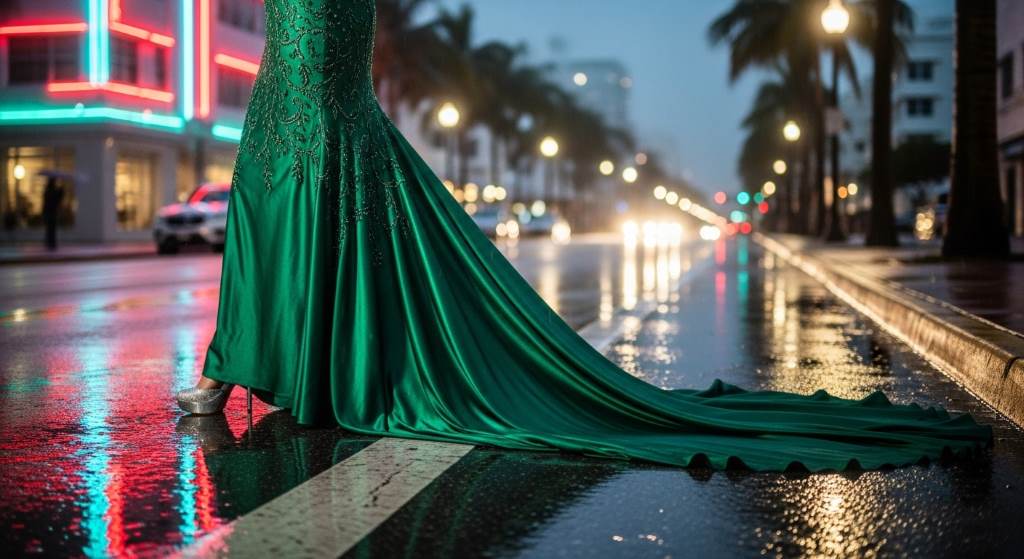
Miami is famous for luxury fashion, upscale nightlife, and glamorous evening events. However, the city’s rainy weather creates a frustrating problem for many women who wear formal gowns outdoors. According to the National Weather Service, Miami receives nearly 60 inches of rain each year, while sudden storms appear most often during the humid summer season. As a result, long dresses frequently drag through puddles, sidewalks, and wet pavement during events. Many fashion lovers now search for temporary dress hemming ideas before attending weddings, rooftop dinners, and gala nights in South Florida.
Miami’s Rainy Climate Creates Constant Fashion Problems
Miami’s tropical climate affects clothing choices more than most people expect. Heavy rain often arrives without warning, especially between May and October. Therefore, women wearing floor-length gowns struggle to keep fabric clean and dry while walking outdoors. Wet streets also increase the chance of gowns sticking to shoes or absorbing dirty water from sidewalks.
Evening gowns usually feature soft fabrics like satin, chiffon, silk, and tulle. Unfortunately, these materials absorb moisture very quickly during storms. In addition, Miami’s humidity prevents dresses from drying fast after exposure to rainwater. Many stylists now recommend lighter silhouettes and smart layering techniques similar to style a drop waist dress concepts that improve movement and balance.
Sidewalk design also contributes to the issue across many parts of Miami. Brick pathways, uneven curbs, and flooded intersections create dangerous conditions for long gowns. Consequently, hems become soaked within minutes during outdoor events. Fashion designers often overlook these local environmental details when creating red carpet inspired dresses for South Florida customers.
Why Long Evening Gowns Struggle on Wet Streets
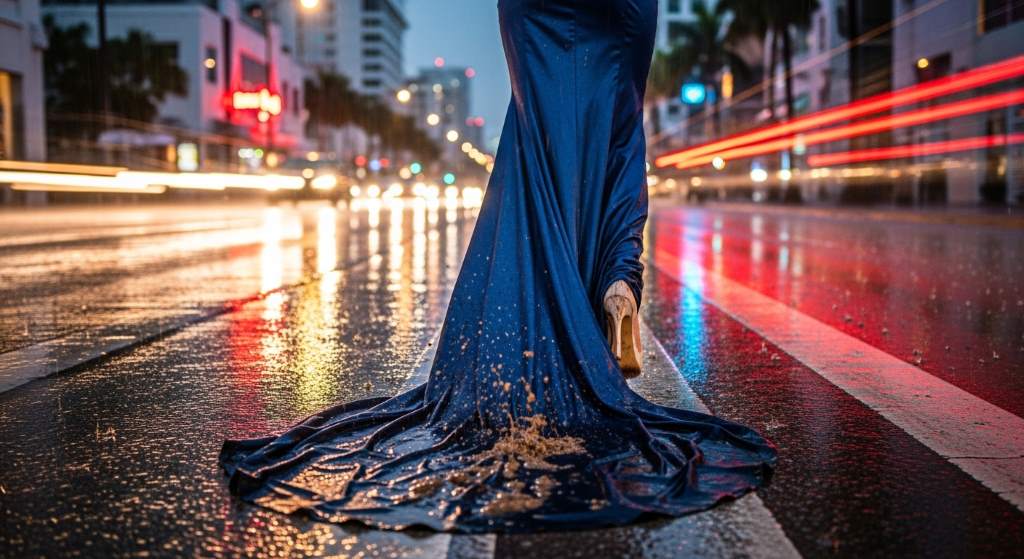
Most formal gowns prioritize appearance over function during design stages. Designers usually focus on elegance, dramatic trains, and flowing silhouettes instead of weather resistance. As a result, dresses that look beautiful indoors become difficult to manage outside in rainy conditions. Miami’s unpredictable weather exposes these weaknesses very quickly.
Long hems naturally sit close to the ground even before rain begins. Once fabric absorbs water, the dress becomes heavier and stretches lower toward the pavement. Therefore, women often find themselves lifting their gowns while crossing streets or entering venues. This constant adjustment creates discomfort and interrupts confidence during social events.
Fabric weight changes dramatically after exposure to moisture. Satin becomes slippery, while chiffon sticks against legs and shoes during movement. Moreover, layered skirts collect hidden water that keeps dripping long after the rain stops. Many women underestimate how quickly one short walk can ruin an expensive evening gown.
The Hidden Role of Miami’s Humidity
Humidity creates problems beyond simple rain exposure in South Florida. Moisture stays trapped in the air throughout most evenings in Miami. Consequently, fabrics remain damp much longer compared to drier cities. This lingering moisture causes gowns to drag lower as the night continues.
Some fabrics also expand slightly in humid conditions. Silk blends and lightweight satin can lose structure after prolonged exposure to warm, wet air. Therefore, dresses that fit perfectly indoors may appear longer outdoors later in the evening. Few fashion blogs discuss this real environmental effect despite its importance.
Outdoor Events Make the Problem Worse
Miami hosts countless outdoor weddings, yacht parties, rooftop dinners, and beachside galas every year. While these locations create stunning views, they also expose gowns directly to weather challenges. Rainwater pools quickly on sidewalks near beaches and entertainment districts. As a result, elegant dresses often become soaked before guests even reach the venue entrance.
Valet parking areas also create unexpected issues for formalwear. Guests frequently walk across wet pavement while stepping out of vehicles during storms. In addition, crowded entrances force women to pause in rainy conditions longer than expected. Even a short delay can damage delicate gown hems permanently.
Brickell, South Beach, and Wynwood each present different surface challenges for evening wear. Some areas feature textured sidewalks that trap water inside small gaps and cracks. Therefore, gowns collect dirt and grime alongside rainwater during every step. This combination leaves visible stains that become difficult to remove later.
Modern Fashion Trends Increase Dragging Problems
Current fashion trends favor oversized skirts, dramatic trains, and extra-long silhouettes. Although these designs look elegant in photographs, they perform poorly during rainy weather in Miami. Longer hems naturally create more contact with puddles and wet surfaces. Consequently, trendy gowns often become impractical for real outdoor movement.
Social media also influences gown choices heavily among younger buyers. Many women choose dramatic styles inspired by celebrity red carpet looks without considering weather conditions. However, those glamorous outfits usually appear only indoors or on protected event carpets. Styling techniques like blue floral dress print placement strategies show how visual elegance can still work without excessive fabric length.
Fast fashion contributes to the problem as well. Many affordable gowns use low-quality lining and thin hems that absorb water immediately. Additionally, cheaper materials lose shape faster after exposure to rain and humidity. This makes dragging worse after only one evening outdoors.
Why High Heels Make It More Difficult
Many women pair evening gowns with high heels during formal occasions. However, wet streets make walking in heels far less stable and safe. Consequently, people take shorter steps and slower movements to avoid slipping. This slower pace increases the amount of time the dress hem stays in contact with wet ground.
Thin heels also sink slightly into soft pavement or grass after rainfall. As a result, the gown drops lower with each careful step across outdoor surfaces. Miami venues with garden entrances or waterfront spaces make this problem even more noticeable. Few guests anticipate how much footwear affects gown length during rainy evenings.
Practical Ways to Prevent Evening Gowns From Dragging
Choosing the correct gown length remains the simplest solution for Miami weather. Dresses that stop slightly above the ankle often stay cleaner during rainy nights. In addition, shorter hems improve comfort while walking through crowded streets or valet areas. Fashion experts increasingly recommend adaptable formalwear for tropical climates.
Temporary hemming solutions also help during emergency weather situations. Fashion tape, hidden clips, and removable stitching can shorten gowns quickly before outdoor events. Therefore, women gain more flexibility without permanently altering expensive dresses. Many stylists now prepare weather backup kits specifically for Miami events.
Fabric selection matters just as much as length during rainy seasons. Lightweight crepe, structured polyester blends, and wrinkle resistant materials perform better outdoors. Meanwhile, heavy satin and multi-layer tulle absorb far more moisture after rainfall. Choosing weather-friendly fabrics helps preserve elegance while reducing discomfort.
Useful Accessories for Rainy Evenings
Several simple accessories can protect evening gowns during sudden storms in Miami. Women often carry compact umbrellas and foldable flats for outdoor movement between venues. Additionally, detachable overskirts provide dramatic style indoors while allowing easier walking outside. These practical additions reduce stress during unpredictable weather changes.
Garment clips have become surprisingly popular among professional stylists in South Florida. These hidden clips temporarily lift the hem while preserving the overall appearance of the gown. Consequently, dresses stay cleaner during transportation or rainy walks. Many luxury event planners quietly recommend this technique to clients.
The Rarely Discussed Issue of Street Drainage and Fabric Damage
One uncommon but important issue involves Miami’s street drainage system. During heavy rain, standing water often contains oil residue, sand, and tiny debris from roads and sidewalks. Therefore, gowns dragging through puddles collect more than simple rainwater. This mixture damages fabric fibers much faster than many people realize.
Salt from nearby ocean air also affects fabric durability over time. Moist sea air combines with rainwater and weakens delicate materials after repeated exposure. Consequently, hems begin fraying faster near the bottom edges of gowns. Very few fashion articles discuss this environmental factor despite its real impact in coastal cities.
Professional cleaners in Miami frequently report increased stain problems during summer event seasons. Muddy water leaves yellow or gray marks along gown hems that become difficult to remove completely. In addition, repeated soaking weakens stitching and lining underneath the dress. Preventing contact with wet pavement remains far cheaper than repair or replacement.
How Miami Fashion Culture Is Slowly Changing
Many Miami designers now recognize the practical needs of local customers. Evening wear collections increasingly include raised hems, detachable trains, and breathable materials for tropical climates. Consequently, women no longer need to sacrifice comfort entirely for elegance. Functional glamour has started becoming more accepted in formal fashion circles.
Luxury boutiques also educate buyers more carefully before major events. Stylists often ask about venue location, transportation, and weather forecasts before recommending gowns. This personalized approach helps customers avoid common mistakes during rainy seasons. Fashion decisions now involve environmental awareness alongside appearance.
Event organizers have adapted as well across South Florida venues. Covered walkways, indoor photography areas, and weather backup plans appear more often at upscale locations. Therefore, guests experience fewer problems managing formalwear during sudden rainstorms. Practical planning improves the overall event experience significantly.
Conclusion
Evening gowns keep dragging on rainy streets in Miami, FL because fashion trends often ignore the realities of tropical weather, humidity, and wet urban surfaces. Long fabrics absorb moisture quickly, while flooded sidewalks create constant movement challenges during outdoor events. However, smarter styling choices, better fabrics, and temporary hemming solutions can reduce these problems significantly. Fashion lovers who explore adaptable ideas like style feather dress for weddings techniques often balance elegance with comfort more successfully. If you regularly attend formal events in Miami, start choosing weather-friendly gowns that keep you stylish, confident, and comfortable during every season.
FAQs
Why do evening gowns become longer after rain exposure?
Wet fabric absorbs water and stretches downward, making the gown appear longer.
Which gown fabrics work best for Miami’s rainy weather?
Structured polyester blends, lightweight crepe, and wrinkle resistant fabrics perform best outdoors.
Can humidity alone make dresses drag on the ground?
Yes, Miami’s humidity can soften fabrics and slightly increase their length during long events.
Are detachable trains practical for rainy outdoor events?
Yes, detachable trains help maintain elegance indoors while improving movement outside.
What is the fastest temporary solution for dragging hems?
Fashion tape and hidden garment clips provide quick temporary hemming during emergencies.